
Granit nyaéta jenis batuan beku anu digali kusabab kakuatan, kapadetan, daya tahan, sareng résistansi anu ekstrim kana korosi. Tapi granit ogé serbaguna pisan - éta henteu ngan ukur pikeun pasagi sareng pasagi panjang! Kanyataanna, Kami percaya diri damel sareng komponén granit anu direkayasa dina bentuk, sudut, sareng kurva tina sagala variasi sacara rutin - kalayan hasil anu saé pisan.
Ngaliwatan pamrosésan canggih kami, permukaan anu dipotong tiasa janten rata pisan. Kualitas ieu ngajantenkeun granit bahan anu idéal pikeun nyiptakeun dasar mesin sareng komponén métrologi ukuran khusus sareng desain khusus. Granit nyaéta:
■ tiasa diolah nganggo mesin
■ rata pisan nalika dipotong sareng réngsé
■ tahan karat
■ awét
■ awét
Komponen granit ogé gampang dibersihkeun. Nalika nyieun desain khusus, pastikeun milih granit pikeun kauntungan anu unggul.
STANDAR / APLIKASI KEGUNAAN LUHUR
Granit anu dianggo ku ZHHIMG pikeun produk pelat permukaan standar kami ngagaduhan kandungan kuarsa anu luhur, anu nyayogikeun résistansi anu langkung ageung kana karusakan sareng karusakan. Warna Hideung Superior kami ngagaduhan tingkat panyerepan cai anu handap, ngaminimalkeun kamungkinan alat ukur presisi anjeun karat nalika dipasang dina pelat. Warna granit anu ditawarkeun ku ZHHIMG ngahasilkeun kirang silau, anu hartosna kirang kacapean panon pikeun individu anu nganggo pelat. Kami parantos milih jinis granit kami bari mertimbangkeun ékspansi termal dina upaya pikeun ngajaga aspék ieu minimal.
APLIKASI KHUSUS
Nalika aplikasi anjeun meryogikeun pelat kalayan bentuk khusus, sisipan ulir, slot atanapi pamrosésan anu sanés, anjeun kedah milih bahan sapertos Hideung Jinan Hideung. Bahan alami ieu nawiskeun kaku anu unggul, peredam geter anu saé, sareng kamampuan pamrosésan anu ditingkatkeun.
Penting pikeun dicatet yén warna nyalira sanés indikasi kualitas fisik batu. Sacara umum, warna granit aya hubunganana langsung sareng ayana atanapi henteuna mineral, anu panginten henteu aya hubunganana sareng kualitas anu ngajantenkeun bahan pelat permukaan anu saé. Aya granit pink, kulawu, sareng hideung anu saé pisan pikeun pelat permukaan, ogé granit hideung, kulawu, sareng pink anu henteu cocog pisan pikeun aplikasi presisi. Ciri-ciri penting granit, sabab aya hubunganana sareng panggunaanana salaku bahan pelat permukaan, henteu aya hubunganana sareng warna, sareng sapertos kieu:
■ Kakakuan (defleksi dina beban - dituduhkeun ku Modulus Élastisitas)
■ Karasa
■ Kapadetan
■ Résistansi ngagem
■ Stabilitas
■ Porositas
Kami parantos nguji seueur bahan granit sareng ngabandingkeun bahan-bahan ieu. Tungtungna kami kéngingkeun hasilna, granit hideung Jinan mangrupikeun bahan pangsaéna anu kantos kami terang. Granit Hideung India sareng granit Afrika Kidul sami sareng Granit Hideung Jinan, tapi sipat fisikna kirang tibatan Granit Hideung Jinan. ZHHIMG bakal teras milarian langkung seueur bahan granit di dunya sareng ngabandingkeun sipat fisikna.
Kanggo ngobrol langkung seueur ngeunaan granit anu pas pikeun proyék anjeun, mangga ngahubungi kamiinfo@zhhimg.com.
Pabrik anu béda-béda nganggo standar anu béda-béda. Aya seueur standar di dunya.
Standar DIN, ASME B89.3.7-2013 atanapi Spésifikasi Féderal GGG-P-463c (Pelat Permukaan Granit) sareng saterasna salaku dasar pikeun spésifikasina.
Sareng kami tiasa ngadamel pelat inspeksi presisi granit numutkeun kabutuhan anjeun. Wilujeng sumping ngahubungi kami upami anjeun hoyong terang langkung seueur inpormasi ngeunaan langkung seueur standar.
Karataan bisa dianggap salaku sadaya titik dina beungeut anu aya dina dua bidang sajajar, bidang dasar sareng bidang hateup. Pangukuran jarak antara bidang nyaéta karataan sakabéh beungeut. Pangukuran karataan ieu umumna ngagaduhan toleransi sareng tiasa kalebet sebutan kelas.
Contona, toleransi kerataan pikeun tilu tingkatan standar dihartikeun dina spésifikasi féderal sakumaha anu ditangtukeun ku rumus ieu:
■ Kelas Laboratorium AA = (40 + diagonal kuadrat/25) x .000001" (unilateral)
■ Tingkat Inspeksi A = Tingkat Laboratorium AA x 2
■ Kelas Ruang Pakakas B = Kelas Laboratorium AA x 4.
Pikeun pelat permukaan ukuran standar, kami ngajamin toleransi kerataan anu ngaleuwihan sarat spésifikasi ieu. Salian ti kerataan, ASME B89.3.7-2013 & Spésifikasi Féderal GGG-P-463c ngabahas topik-topik kalebet: akurasi pangukuran ulang, sipat bahan granit pelat permukaan, hasil akhir permukaan, lokasi titik pangrojong, kaku, metode pamariksaan anu tiasa ditampi, pamasangan sisipan ulir, jsb.
Pelat permukaan granit ZHHIMG sareng pelat inspeksi granit nyumponan atanapi ngaleuwihan sadaya sarat anu ditetepkeun dina spésifikasi ieu. Ayeuna, teu aya spésifikasi anu pasti pikeun pelat sudut granit, paralel, atanapi pasagi induk.
Sareng anjeun tiasa mendakan rumus pikeun standar sanésna diUNDUH.
Mimitina, penting pikeun ngajaga pelat tetep bersih. Lebu abrasif anu kasebar di udara biasana mangrupikeun sumber karusakan anu paling ageung dina pelat, sabab condong nempel dina benda kerja sareng permukaan kontak alat ukur. Kadua, tutup pelat anjeun pikeun ngajagaan tina lebu sareng karusakan. Umur pakai tiasa diperpanjang ku cara nutupan pelat nalika henteu dianggo, ku cara muterkeun pelat sacara périodik supados hiji daérah henteu kaleuleuwihi dianggo, sareng ku cara ngagentos bantalan kontak baja dina alat ukur ku bantalan karbida. Ogé, hindari neundeun tuangeun atanapi inuman lemes dina pelat. Catet yén seueur inuman lemes ngandung asam karbonat atanapi fosfat, anu tiasa ngaleyurkeun mineral anu langkung lemes sareng ninggalkeun liang alit dina permukaan.
Ieu gumantung kana kumaha piring éta dianggo. Upami tiasa, kami nyarankeun pikeun ngabersihkeun piring di awal dinten (atanapi shift damel) sareng deui di akhirna. Upami piring janten kotor, khususna ku cairan anu berminyak atanapi lengket, éta kedah langsung dibersihkeun.
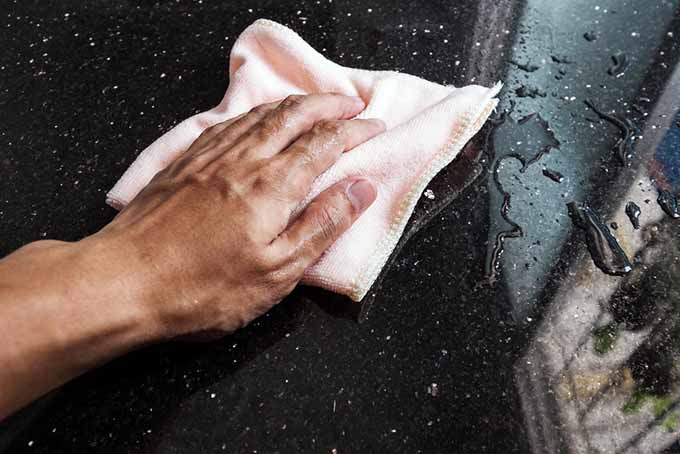
Bersihkeun pelat sacara rutin nganggo cairan atanapi pembersih pelat permukaan ZHHIMG Waterless. Pilihan larutan pembersih penting pisan. Upami pelarut anu gampang nguap dianggo (aseton, pengencer lak, alkohol, jsb.) penguapan bakal niiskeun permukaan, sareng ngabengkokkeunana. Dina hal ieu, perlu ngantepkeun pelat normal sateuacan dianggo atanapi kasalahan pangukuran bakal kajantenan.
Jumlah waktos anu diperyogikeun pikeun piring pikeun normal bakal bénten-bénten gumantung kana ukuran piring, sareng jumlah pendinginan. Sajam cekap pikeun piring anu langkung alit. Dua jam panginten diperyogikeun pikeun piring anu langkung ageung. Upami nganggo pembersih basis cai, ogé bakal aya sababaraha pendinginan anu nguap.
Pelat éta ogé bakal nahan cai, sareng ieu tiasa nyababkeun karat dina bagian logam anu kontak sareng permukaan. Sababaraha pembersih ogé bakal ninggalkeun sésa anu lengket saatos garing, anu bakal narik lebu anu ngalayang, sareng saleresna ningkatkeun karusakan, tinimbang ngiranganana.
Ieu gumantung kana panggunaan pelat sareng lingkunganana. Kami nyarankeun pelat atanapi asesoris granit presisi énggal nampi kalibrasi ulang lengkep dina sataun ti saprak pameseran. Upami pelat permukaan granit bakal sering dianggo, langkung saé pikeun ngirangan interval ieu janten genep bulan. Inspeksi bulanan pikeun kasalahan pangukuran anu diulang nganggo level Éléktronik, atanapi alat anu sami bakal nunjukkeun titik-titik anu ruksak sareng ngan ukur peryogi sababaraha menit kanggo dilaksanakeun. Saatos hasil kalibrasi ulang anu munggaran ditangtukeun, interval kalibrasi tiasa diperpanjang atanapi disingget sakumaha anu diidinan atanapi diwajibkeun ku sistem kualitas internal anjeun.
Kami tiasa nawiskeun jasa pikeun ngabantosan anjeun mariksa sareng ngalibrasi pelat permukaan granit anjeun.

Aya sababaraha kamungkinan sabab pikeun variasi antara kalibrasi:
- Beungeutna dikumbah ku larutan panas atanapi tiis sateuacan kalibrasi, sareng teu dibéré waktos anu cekap pikeun normalisasi.
- Pelatna teu dirojong kalawan bener
- Parobahan suhu
- Draf
- Sinar panonpoé langsung atanapi panas radiasi sanésna dina permukaan pelat. Pastikeun yén lampu di luhur henteu manaskeun permukaan
- Variasi dina gradien suhu vertikal antara usum tiris sareng usum panas (Upami tiasa, terang suhu gradien vertikal nalika kalibrasi dilaksanakeun.)
- Pelat teu dibéré waktos anu cekap pikeun normal deui saatos pangiriman
- Panggunaan alat pamariksaan anu teu leres atanapi panggunaan alat anu henteu dikalibrasi
- Parobahan permukaan akibat tina maké
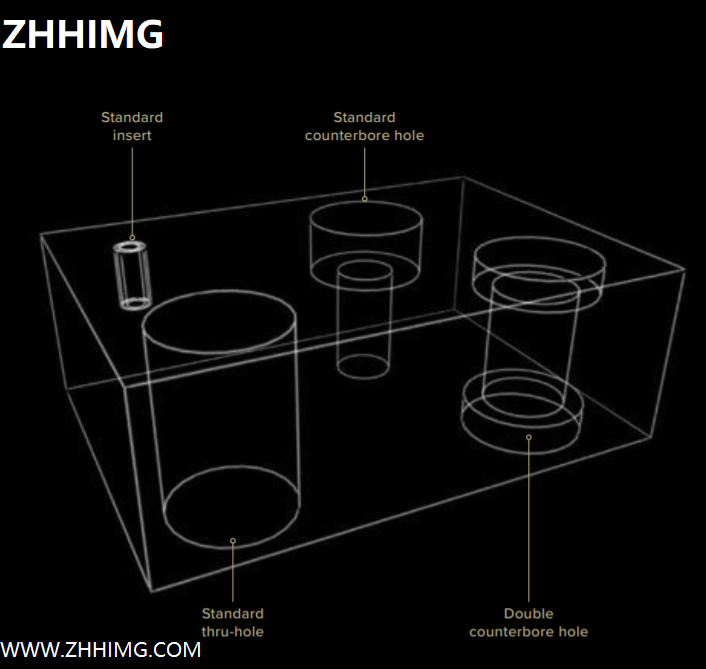
Sabaraha jinis liang dina granit presisi?
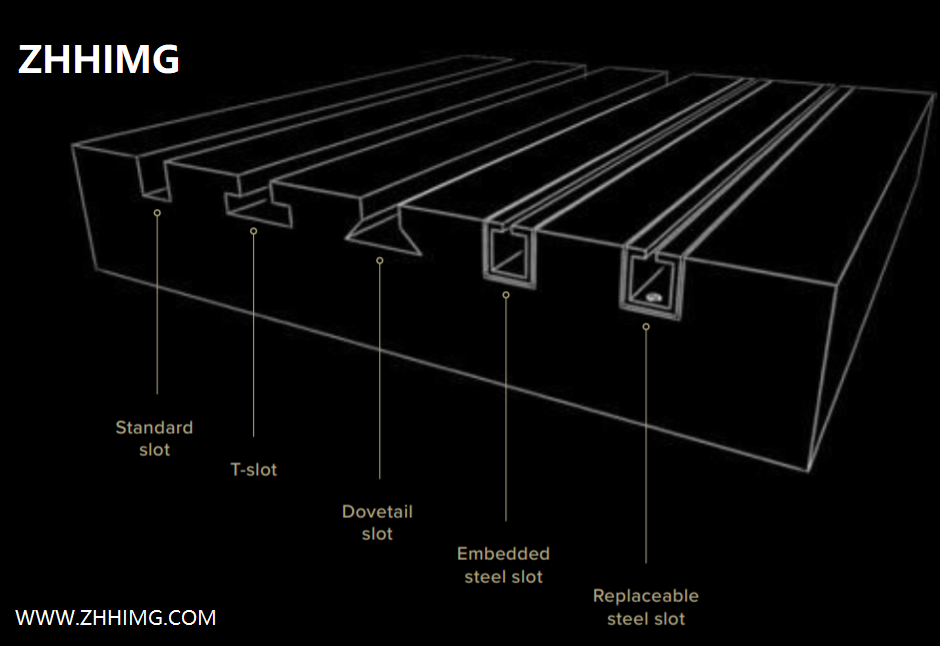
Slot dina Komponen Granit Presisi
Pikeun seueur pabrik, rohangan pamariksaan sareng laboratorium, pelat permukaan granit presisi dianggo salaku dasar pikeun pangukuran anu akurat. Kusabab unggal pangukuran linier gumantung kana permukaan rujukan anu akurat tina mana diménsi ahir dicandak, pelat permukaan nyayogikeun bidang rujukan anu pangsaéna pikeun pamariksaan sareng tata letak padamelan sateuacan dimesin. Éta ogé mangrupikeun dasar anu idéal pikeun ngadamel pangukuran jangkungna sareng permukaan gaging. Salajengna, tingkat kerataan, stabilitas, kualitas sakabéhna sareng padamelan anu luhur ngajantenkeun éta pilihan anu saé pikeun masang sistem gaging mékanis, éléktronik sareng optik anu canggih. Pikeun prosés pangukuran ieu, penting pikeun ngajaga pelat permukaan dikalibrasi.
Pangukuran Ulang sareng Karataan
Pangukuran rata jeung pangulangan duanana penting pisan pikeun mastikeun permukaan anu presisi. Rata bisa dianggap salaku sadaya titik dina permukaan anu aya dina dua bidang sajajar, bidang dasar jeung bidang hateup. Pangukuran jarak antara bidang nyaéta rata sakabéh permukaan. Pangukuran rata ieu umumna mibanda toleransi jeung bisa ngawengku sebutan kelas.
Toleransi kerataan pikeun tilu tingkatan standar ditetepkeun dina spésifikasi féderal sakumaha anu ditangtukeun ku rumus ieu:
Standar DIN, Standar GB, Standar ASME, standar JJS... nagara anu béda-béda kalayan pendirian anu béda-béda...
Langkung seueur rinci ngeunaan standar.
Salian ti kerataan, katerulangan ogé kedah dipastikeun. Pangukuran ulang nyaéta pangukuran daérah kerataan lokal. Éta mangrupikeun pangukuran anu dilakukeun di mana waé dina permukaan pelat anu bakal diulang dina toleransi anu ditetepkeun. Ngontrol kerataan daérah lokal kana toleransi anu langkung ketat tibatan kerataan sacara umum ngajamin parobahan laun dina profil kerataan permukaan, sahingga ngaminimalkeun kasalahan lokal.
Pikeun mastikeun pelat permukaan nyumponan spésifikasi pangukuran rata sareng pangukuran anu diulang, produsén pelat permukaan granit kedah nganggo Spésifikasi Federal GGG-P-463c salaku dasar pikeun spésifikasina. Standar ieu ngabahas akurasi pangukuran anu diulang, sipat bahan granit pelat permukaan, hasil akhir permukaan, lokasi titik pangrojong, kaku, metode pamariksaan anu tiasa ditampi sareng pamasangan sisipan anu diulir.
Mariksa Akurasi Pelat
Ku nuturkeun sababaraha pedoman saderhana, investasi dina pelat permukaan granit kedah tahan salami mangtaun-taun. Gumantung kana panggunaan pelat, lingkungan bengkel sareng akurasi anu diperyogikeun, frékuénsi mariksa akurasi pelat permukaan béda-béda. Aturan umum nyaéta pelat énggal kedah nampi kalibrasi ulang lengkep dina sataun saatos pameseran. Upami pelat sering dianggo, disarankeun pikeun ngirangan interval ieu janten genep bulan.
Sateuacan pelat permukaan geus aus ngaleuwihan spésifikasi pikeun tingkat kerataan sakabéhna, éta bakal némbongkeun tihang anu aus atanapi bergelombang. Inspeksi bulanan pikeun kasalahan pangukuran anu diulang nganggo alat ukur maca anu diulang bakal ngaidentipikasi titik-titik aus. Alat ukur maca anu diulang nyaéta instrumen presisi tinggi anu ngadeteksi kasalahan lokal sareng tiasa ditampilkeun dina amplifier éléktronik pembesaran tinggi.
Program pamariksaan anu efektif kedah ngawengku pamariksaan rutin nganggo autokolimator, anu nyayogikeun kalibrasi anu saleresna tina kerataan sakabéhna anu tiasa dilacak ka Institut Standar sareng Téknologi Nasional (NIST). Kalibrasi komprehensif ku produsén atanapi perusahaan mandiri diperyogikeun ti waktos ka waktos.
Variasi Antara Kalibrasi
Dina sababaraha kasus, aya variasi antara kalibrasi pelat permukaan. Kadang-kadang faktor sapertos parobahan permukaan anu disababkeun ku karusakan, panggunaan alat pamariksaan anu salah atanapi panggunaan alat anu henteu dikalibrasi tiasa nyababkeun variasi ieu. Nanging, dua faktor anu paling umum nyaéta suhu sareng pangrojong.
Salah sahiji variabel anu paling penting nyaéta suhu. Salaku conto, permukaan panginten parantos dikumbah ku larutan panas atanapi tiis sateuacan kalibrasi sareng henteu dibéré waktos anu cekap pikeun normalisasi. Sabab-sabab sanés tina parobahan suhu kalebet angin tiis atanapi panas, sinar panonpoé langsung, cahaya di luhur atanapi sumber panas radiasi anu sanés dina permukaan pelat.
Ogé tiasa aya variasi dina gradien suhu vertikal antara usum tiris sareng usum panas. Dina sababaraha kasus, pelat henteu dibéré waktos anu cekap pikeun normalisasi saatos pangiriman. Mangrupikeun ide anu saé pikeun ngarékam suhu gradien vertikal nalika kalibrasi dilaksanakeun.
Panyabab umum anu sanés pikeun variasi kalibrasi nyaéta pelat anu henteu didukung kalayan leres. Pelat permukaan kedah didukung dina tilu titik, idéalna aya 20% tina panjangna ti tungtung pelat. Dua pangrojong kedah aya 20% tina lébar ti sisi anu panjang, sareng pangrojong sésana kedah aya di tengah.
Ngan tilu titik anu tiasa nangtung pageuh dina naon waé kecuali permukaan anu presisi. Nyobian ngadukung pelat di langkung ti tilu titik bakal nyababkeun pelat nampi dukunganana tina rupa-rupa kombinasi tilu titik, anu moal janten tilu titik anu sami anu ditopang nalika produksi. Ieu bakal nyababkeun kasalahan nalika pelat ngabengkok pikeun saluyu sareng susunan dukungan anu énggal. Pertimbangkeun nganggo dudukan baja kalayan balok dukungan anu dirancang pikeun sajajar sareng titik dukungan anu leres. Dudukan pikeun tujuan ieu umumna sayogi ti produsén pelat permukaan.
Upami pelatna ditopang kalayan leres, perataan anu tepat ngan diperyogikeun upami aya aplikasi anu nangtukeunana. Perataan henteu diperyogikeun pikeun ngajaga akurasi pelat anu ditopang kalayan leres.
Manjangkeun Umur Pelat
Nuturkeun sababaraha pedoman bakal ngirangan karusakan dina pelat permukaan granit sareng pamustunganana, manjangkeun umurna.
Mimitina, penting pikeun ngajaga pelat tetep bersih. Lebu abrasif anu ngalayang di udara biasana mangrupikeun sumber karusakan sareng cimata anu paling ageung dina pelat, sabab condong nempel dina benda kerja sareng permukaan kontak alat ukur.
Penting ogé pikeun nutupan pelat pikeun ngajaga tina lebu sareng karusakan. Umur pakai tiasa diperpanjang ku cara nutupan pelat nalika henteu dianggo.
Puterkeun pelat sacara périodik supados hiji daérah henteu dianggo kaleuleuwihi. Ogé, disarankeun pikeun ngagentos bantalan kontak baja dina gauging ku bantalan karbida.
Ulah neundeun kadaharan atanapi inuman ringan dina piring. Seueur inuman ringan ngandung asam karbonat atanapi fosfat, anu tiasa ngaleyurkeun mineral anu langkung lemes sareng nyésakeun liang alit dina permukaanana.
Tempat pikeun Relap
Nalika pelat permukaan granit peryogi diropéa, pertimbangkeun naha jasa ieu kedah dilaksanakeun di tempat atanapi di fasilitas kalibrasi. Langkung saé upami pelat dipasang deui di pabrik atanapi fasilitas khusus. Nanging, upami pelatna henteu ruksak parah, umumna dina 0,001 inci tina toleransi anu diperyogikeun, éta tiasa diropéa di tempat. Upami pelat ruksak dugi ka langkung ti 0,001 inci tina toleransi, atanapi upami aya liang atanapi sobekan anu parah, maka éta kedah dikirim ka pabrik pikeun digiling sateuacan dipasang deui.
Fasilitas kalibrasi ngagaduhan peralatan sareng setélan pabrik anu nyayogikeun kaayaan optimal pikeun kalibrasi pelat anu leres sareng ngolah deui upami diperyogikeun.
Kudu ati-ati pisan dina milih teknisi kalibrasi sareng resurfacing di tempat. Nyuhunkeun akreditasi sareng verifikasi alat anu bakal dianggo ku teknisi gaduh kalibrasi anu tiasa dilacak. Pangalaman ogé mangrupikeun faktor anu penting, sabab peryogi mangtaun-taun pikeun diajar kumaha cara ngalapis granit presisi kalayan leres.
Pangukuran kritis dimimitian ku pelat permukaan granit anu presisi salaku dasar. Ku cara mastikeun rujukan anu tiasa dipercaya ku cara nganggo pelat permukaan anu dikalibrasi kalayan leres, produsén gaduh salah sahiji alat penting pikeun pangukuran anu tiasa dipercaya sareng suku cadang anu kualitasna langkung saé.Q
Daptar Pariksa pikeun Variasi Kalibrasi
1. Beungeutna dikumbah ku larutan panas atanapi tiis sateuacan kalibrasi sareng teu dibéré waktos anu cekap pikeun normalisasi.
2. Pelatna teu ditopang kalawan bener.
3. Parobahan suhu.
4. Draf.
5. Sinar panonpoé langsung atanapi panas radiasi sanésna dina permukaan pelat. Pastikeun yén lampu di luhur henteu manaskeun permukaan.
6. Variasi dina gradien suhu vertikal antara usum tiris sareng usum panas. Upami tiasa, terang suhu gradien vertikal nalika kalibrasi dilaksanakeun.
7. Pelat teu dibéré waktos anu cekap pikeun normal deui saatos dikirim.
8. Panggunaan alat pamariksaan anu teu leres atanapi panggunaan alat anu teu dikalibrasi.
9. Parobahan beungeut akibat tina maké.
Tip Téknologi
- Kusabab unggal pangukuran linier gumantung kana permukaan rujukan anu akurat tina mana diménsi ahir dicandak, pelat permukaan nyayogikeun bidang rujukan anu pangsaéna pikeun pamariksaan padamelan sareng tata letak sateuacan dimesin.
- Ngontrol rataan daérah lokal kana toleransi anu langkung ketat tibatan rataan sakabéhna ngajamin parobahan laun dina profil rataan permukaan, sahingga ngaminimalkeun kasalahan lokal.
- Program pamariksaan anu efektif kedah ngawengku pamariksaan rutin nganggo autokolimator, anu nyayogikeun kalibrasi anu saleresna tina kerataan sakabéhna anu tiasa dilacak ka Otoritas Inspeksi Nasional.
Di antara partikel mineral anu ngawangun granit, langkung ti 90% nyaéta feldspar sareng kuarsa, anu paling seueur nyaéta feldspar. Feldspar sering bodas, kulawu, sareng beureum daging, sareng kuarsa biasana teu warnaan atanapi bodas kulawu, anu ngawangun warna dasar granit. Feldspar sareng kuarsa mangrupikeun mineral anu teuas, sareng hésé dipindahkeun ku péso baja. Sedengkeun pikeun bintik poék dina granit, utamina mika hideung, aya sababaraha mineral sanés. Sanaos biotit relatif lemes, kamampuanna pikeun nolak setrés henteu lemah, sareng dina waktos anu sami aranjeunna gaduh jumlah sakedik dina granit, sering kirang ti 10%. Ieu mangrupikeun kaayaan bahan dimana granit khususna kuat.
Alesan séjén kunaon granit téh kuat nyaéta partikel mineralna silih kabeungkeut pageuh sarta silih tempelkeun. Pori-porina mindeng kurang ti 1% tina total volume batu. Ieu méré granit kamampuh pikeun nahan tekanan anu kuat sarta henteu gampang ditembus ku kalembaban.
Komponen granit didamel tina batu anu henteu tahan karat, asam sareng alkali, tahan aus anu saé sareng umur panjang, henteu aya perawatan khusus. Komponen presisi granit biasana dianggo dina perkakas industri mesin. Ku alatan éta, aranjeunna disebut komponén presisi granit atanapi komponén granit. Ciri-ciri komponén presisi granit dasarna sami sareng platform granit. Bubuka kana perkakas sareng pangukuran komponén presisi granit: Mesin presisi sareng téknologi mesin mikro mangrupikeun arah pamekaran anu penting pikeun industri manufaktur mesin, sareng éta parantos janten indikator penting pikeun ngukur tingkat téknologi tinggi. Kamekaran téknologi canggih sareng industri pertahanan henteu tiasa dipisahkeun tina mesin presisi sareng téknologi mesin mikro. Komponen granit tiasa digeser kalayan lancar dina pangukuran, tanpa stagnasi. Pangukuran permukaan kerja, goresan umum henteu mangaruhan akurasi pangukuran. Komponen granit kedah dirancang sareng diproduksi numutkeun sarat sisi paménta.
Widang aplikasi:
Sapertos anu urang terang, beuki seueur mesin sareng peralatan anu milih komponén granit presisi.
Komponen granit dianggo pikeun gerakan dinamis, motor linier, cmm, cnc, mesin laser...
wilujeng sumping ngahubungi kami kanggo inpormasi lengkep.
Alat ukur granit sareng komponén mékanis granit didamel tina granit Hideung Jinan anu kualitasna luhur. Kusabab presisi anu luhur, awét, stabilitas anu saé sareng tahan korosi, alat-alat ieu beuki seueur dianggo dina pamariksaan produk industri modéren sareng widang ilmiah sapertos aerospace mékanis sareng panalungtikan ilmiah.
Kauntungan
----Dua kali leuwih teuas tibatan beusi cor;
----Parobahan minimal dina diménsi disababkeun ku parobahan suhu;
----Bebas tina remuk, janten teu aya gangguan padamelan;
----Bebas tina gerinda atanapi tonjolan kusabab struktur butir anu lemes sareng teu lengket anu signifikan, anu mastikeun tingkat kerataan anu luhur salami umur panjang sareng henteu nyababkeun karusakan kana bagian atanapi instrumen sanés;
---- Operasi anu bébas masalah pikeun dianggo sareng bahan magnét;
---- Umur panjang sareng bébas karat, anu ngahasilkeun biaya perawatan anu handap.
Pelat permukaan granit anu presisi ieu dilapis sacara presisi kana standar kerataan anu luhur pikeun ngahontal akurasi sareng dianggo salaku dasar pikeun masang sistem pangukur mékanis, éléktronik, sareng optik anu canggih.
Sababaraha fitur unik tina pelat permukaan granit:
Kasaragaman dina Karasa;
Akurat dina Kaayaan beban;
Nyerep Geter;
Gampang dibersihkeun;
Tahan Bungkus;
Porositas Handap;
Henteu Ngagosok;
Non-Magnétik
Kaunggulan Pelat Permukaan Granit
Mimitina, batuan saatos lami sepuh alami, strukturna seragam, koéfisién minimum, setrés internalna ngaleungit sagemblengna, henteu cacad, janten presisi na luhur.
Kadua, moal aya goresan, henteu dina kaayaan suhu konstan, dina suhu kamar ogé tiasa ngajaga akurasi pangukuran suhu.
Katilu, sanés magnétisasi, pangukuran tiasa lancar, teu aya rarasaan creaky, henteu kapangaruhan ku Uap, pesawatna tetep.
Kaopat, kaku na saé, karasana luhur, résistansi abrasi kuat.
Kalima, teu sieun ku asam, erosi cairan basa, moal karat, teu kudu dicét ku minyak, teu gampang lengket mikro-lebu, pangropéa, gampang dijaga, umur layanan panjang.
Naha milih dasar granit tibatan ranjang mesin beusi cor?
1. Basis mesin granit tiasa ngajaga presisi anu langkung luhur tibatan dasar mesin beusi tuang. dasar mesin beusi tuang gampang kapangaruhan ku suhu sareng kalembaban tapi dasar mesin granit henteu;
2. Kalayan ukuran dasar mesin granit sareng dasar beusi tuang anu sami, dasar mesin granit langkung efektif biaya tibatan beusi tuang;
3. Mesin dasar granit husus leuwih gampang direngsekeun tibatan mesin dasar beusi cor.
Pelat permukaan granit mangrupikeun instrumen konci dina laboratorium inspeksi di sakumna nagara. Beungeut pelat permukaan anu dikalibrasi sareng rata pisan ngamungkinkeun para inspektur pikeun ngagunakeunana salaku dasar pikeun inspeksi bagian sareng kalibrasi instrumen. Tanpa stabilitas anu disayogikeun ku pelat permukaan, seueur bagian anu ditolerir pageuh dina rupa-rupa widang téknologi sareng médis bakal langkung sesah, upami sanés mustahil, diproduksi kalayan leres. Tangtosna, pikeun nganggo blok permukaan granit pikeun ngalibrasi sareng mariksa bahan sareng alat sanés, akurasi granit éta sorangan kedah dipeunteun. Pangguna tiasa ngalibrasi pelat permukaan granit pikeun mastikeun akurasina.
Bersihkeun pelat permukaan granit sateuacan kalibrasi. Tuangkeun saeutik pembersih pelat permukaan kana lawon anu bersih sareng lemes teras usap permukaan granit. Langsung garingkeun pembersih tina pelat permukaan ku lawon garing. Entong ngantep cairan pembersih garing di udara.
Teundeun alat ukur anu diulang di tengah pelat permukaan granit.
Arahkan alat ukur ulang ke nol ke permukaan pelat granit.
Pindahkeun alat ukur lalaunan dina beungeut granit. Perhatikeun indikator alat ukur sareng catet puncak tina variasi jangkungna nalika anjeun mindahkeun alat dina pelat.
Bandingkeun variasi kerataan di sakuliah permukaan pelat sareng toleransi pikeun pelat permukaan anjeun, anu bénten-bénten dumasar kana ukuran pelat sareng tingkat kerataan granit. Konsultasikeun spésifikasi féderal GGG-P-463c (tingali Sumberdaya) pikeun nangtukeun naha pelat anjeun nyumponan sarat kerataan pikeun ukuran sareng tingkatanna. Variasi antara titik pangluhurna dina pelat sareng titik panghandapna dina pelat nyaéta pangukuran kerataanna.
Pariksa yén variasi jerona panggedéna dina permukaan pelat aya dina spésifikasi pangulangan pikeun pelat ukuran sareng kelas éta. Konsultasikeun spésifikasi féderal GGG-P-463c (tingali Sumberdaya) pikeun nangtukeun naha pelat anjeun nyumponan sarat pangulangan pikeun ukuranana. Tolak pelat permukaan upami aya hiji titik anu henteu nyumponan sarat pangulangan.
Eureunkeun nganggo pelat permukaan granit anu henteu nyumponan sarat féderal. Balikkeun pelat ka produsén atanapi ka perusahaan permukaan granit pikeun dipoles deui supados nyumponan spésifikasi.
Tip
Laksanakeun kalibrasi formal sahenteuna sataun sakali, sanaos pelat permukaan granit anu sering dianggo kedah dikalibrasi langkung sering.
Kalibrasi formal anu tiasa dirékam dina lingkungan manufaktur atanapi pamariksaan sering dilakukeun ku jaminan kualitas atanapi vendor jasa kalibrasi luar, sanaos saha waé tiasa nganggo alat ukur anu diulang pikeun mariksa pelat permukaan sacara informal sateuacan dianggo.
Sajarah Mimiti Pelat Permukaan Granit
Sateuacan Perang Dunya II, Pabrik nganggo Pelat Beungeut Baja pikeun pamariksaan diménsi bagian-bagianna. Salila Perang Dunya II kabutuhan baja ningkat sacara dramatis, sareng seueur Pelat Beungeut Baja dilebur. Diperlukeun pangganti, sareng Granit janten bahan pilihan kusabab sipat métrologisna anu unggul.
Sababaraha kaunggulan granit dibandingkeun baja janten jelas. Granit langkung teuas, sanaos langkung rapuh sareng gampang pecah. Anjeun tiasa ngagulung Granit dugi ka rata sareng langkung gancang tibatan baja. Granit ogé gaduh sipat anu dipikahoyong nyaéta ékspansi termal anu langkung handap dibandingkeun baja. Salajengna, upami pelat baja peryogi diropéa, éta kedah dikerok ku tukang anu ogé nerapkeun kaahlianana dina ngawangun deui alat mesin.
Salaku catetan tambahan, sababaraha Pelat Beungeut Baja masih dianggo dugi ka ayeuna.
Sipat Métrologis Pelat Granit
Granit nyaéta batuan beku anu kabentuk ku bituna gunungapi. Sabalikna, marmer nyaéta batu kapur anu geus robah bentuk. Pikeun panggunaan métrologi, granit anu dipilih kudu nyumponan sarat husus anu ditetepkeun dina Spésifikasi Féderal GGG-P-463c, anu ayeuna disebut Fed Specs, sarta hususna, Bagian 3.1 3.1 Di antara Fed Specs, granit kudu mibanda tékstur anu lemes nepi ka sedeng.
Granit mangrupikeun bahan anu teuas, tapi karasana rupa-rupa kusabab sababaraha alesan. Teknisi pelat granit anu berpengalaman tiasa ngira-ngira karasana ku warnana anu mangrupikeun indikasi eusi kuarsa na. Karasana granit mangrupikeun sipat anu ditetepkeun sabagian ku jumlah eusi kuarsa sareng kurangna mika. Granit beureum sareng pink condong janten anu paling teuas, kulawu karasana sedeng, sareng hideung anu paling lemes.
Modulus Élastisitas Young dianggo pikeun ngébréhkeun kalenturan atanapi indikasi karasana batu. Granit pink rata-rata 3-5 poin dina skala, kulawu 5-7 poin sareng hideung 7-10 poin. Beuki leutik angkana, beuki teuas granitna. Beuki gedé angkana, beuki lemes sareng langkung fléksibel granitna. Penting pikeun terang karasana Granit nalika milih ketebalan anu diperyogikeun pikeun tingkat toleransi sareng beurat bagian sareng alat ukur anu disimpen dina éta.
Jaman baheula nalika aya tukang mesin sajati, anu dikenal ku buklet méja trig dina saku bajuna, granit hideung dianggap "Anu Pangsaéna." Anu Pangsaéna dihartikeun salaku jinis anu paling tahan kana karusakan atanapi langkung teuas. Salah sahiji kakuranganna nyaéta granit anu langkung teuas condong langkung gampang retak atanapi peupeus. Tukang mesin yakin pisan yén granit hideung mangrupikeun anu pangsaéna sahingga sababaraha produsén granit pink ngawarnaanna hideung.
Kuring sorangan kungsi nyaksian pelat anu murag tina forklift nalika dipindahkeun ti gudang. Pelat éta nabrak lanté teras beulah jadi dua, némbongkeun warna pink anu sabenerna. Ati-ati upami ngarencanakeun mésér granit hideung ti Cina. Kami nyarankeun anjeun miceunan artos anjeun ku cara anu sanés. Pelat granit tiasa bénten-bénten karasana. Garis kuarsa tiasa langkung teuas tibatan sésana pelat permukaan. Lapisan gabro hideung tiasa ngajantenkeun daérah langkung lemes. Teknisi perbaikan pelat permukaan anu terlatih sareng berpengalaman terang kumaha nanganan daérah lemes ieu.
Kelas Pelat Permukaan
Aya opat tingkatan pelat permukaan. Tingkatan laboratorium AA sareng A, Tingkatan Inspeksi Kamar B, sareng anu kaopat nyaéta Tingkatan Bengkel. Tingkatan AA sareng A nyaéta anu paling rata kalayan toleransi kerataan anu langkung saé tibatan 0,00001 inci pikeun pelat Tingkatan AA. Tingkatan Bengkel mangrupikeun anu paling teu rata sareng sapertos namina, éta dimaksudkeun pikeun dianggo di rohangan alat. Sedengkeun Tingkatan AA, Tingkatan A sareng Tingkatan B dimaksudkeun pikeun dianggo di laboratorium inspeksi atanapi kontrol kualitas.
PUji Roper Pikeun Kalibrasi Pelat Permukaan
Kuring sok nyarios ka konsumén kuring yén kuring tiasa narik murangkalih umur 10 taun kaluar ti gereja kuring sareng ngajarkeun aranjeunna ngan ukur sababaraha dinten kumaha nguji piring. Éta henteu sesah. Éta meryogikeun sababaraha téknik pikeun ngalaksanakeun tugas gancang, téknik anu diajarkeun ku waktos sareng seueur pangulangan. Kuring kedah ngawartosan anjeun, sareng kuring henteu tiasa nekenkeun cekap, Fed Spec GGG-P-463c SANÉS prosedur kalibrasi! Langkung seueur ngeunaan éta engké.
Kalibrasi pamariksaan kerataan sakabéhna (Mean Pane) sareng Repeatability (aus lokal) mangrupikeun hiji-hijina hal anu kedah dilakukeun. Numutkeun Fed Specs. Hiji-hijina pengecualian pikeun ieu nyaéta pikeun pelat alit dimana repeatability ngan ukur diperyogikeun.
Ogé, sareng sami pentingna sareng tés anu sanésna, nyaéta tés pikeun gradién termal. (Tingali Delta T di handap)
Gambar 1
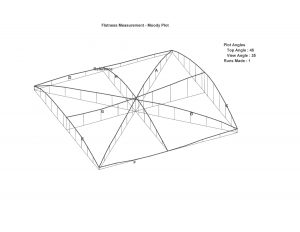
Uji Kerataan gaduh 4 metode anu disatujuan. Tingkat éléktronik, autokolimasi, laser sareng alat anu dikenal salaku locator bidang. Kami ngan ukur nganggo tingkat éléktronik sabab éta mangrupikeun metode anu paling akurat sareng panggancangna pikeun sababaraha alesan.
Laser sareng autokolimator nganggo sinar cahaya anu lempeng pisan salaku rujukan. Urang ngadamel pangukuran kalurusan pelat permukaan granit ku cara ngabandingkeun variasi jarak antara pelat permukaan sareng sinar cahaya. Ku cara nyandak sinar cahaya lempeng, anu ditancapkeun kana target reflektor bari mindahkeun target reflektor ka handap pelat permukaan, jarak antara sinar anu dipancarkeun sareng sinar anu mulang mangrupikeun pangukuran kalurusan.
Ieu masalahna dina metode ieu. Target sareng sumberna kapangaruhan ku geteran, suhu lingkungan, target anu kirang rata atanapi goresan, kontaminasi dina hawa, sareng gerakan hawa (arus). Sadayana ieu nyumbang komponén kasalahan tambahan. Salajengna, kontribusi kasalahan operator tina pamariksaan nganggo autokolimator langkung ageung.
Pangguna autokolimator anu berpengalaman tiasa ngadamel pangukuran anu akurat pisan tapi tetep nyanghareupan masalah sareng konsistensi bacaan khususna dina jarak anu langkung jauh sabab pantulan condong ngalegaan atanapi janten rada kabur. Ogé, target anu kirang rata sareng dinten anu panjang ngintip ngalangkungan lénsa ngahasilkeun kasalahan tambahan.
Alat pencari lokasi bidang téh bodo pisan. Alat ieu ngagunakeun sinar anu rada lempeng (dibandingkeun jeung sinar kolimat atawa laser anu lempeng pisan) salaku rujukanna. Alat mékanis ieu teu ngan ukur ngagunakeun indikator anu biasana ngan ukur résolusi 20 u Inci, tapi ogé ketidaklurusan batang sareng bahan anu béda-béda nambahan sacara signifikan kana kasalahan dina pangukuran. Numutkeun pamanggih kami, sanaos metode ieu tiasa ditampi, moal aya laboratorium anu kompeten anu bakal ngagunakeun alat pencari lokasi bidang salaku alat pamariksaan akhir.
Tingkat éléktronik nganggo gravitasi salaku rujukanna. Tingkat éléktronik diferensial henteu kapangaruhan ku geteran. Éta gaduh résolusi anu handap sapertos 0,1 detik busur sareng pangukuranna gancang, akurat sareng aya sakedik pisan kontribusi kasalahan ti operator anu berpengalaman. Boh Plane Locators atanapi autokolimator henteu nyayogikeun plot topografi (Gambar 1) atanapi isometrik anu dihasilkeun komputer tina permukaan.
Gambar 2
Uji Kerataan Permukaan anu Leres
Uji kerataan permukaan anu leres mangrupikeun bagian anu penting pisan dina tulisan ieu, kuring kedah nempatkeun éta di awal. Sakumaha anu parantos disebatkeun sateuacanna, Fed Spec. GGG-p-463c SANÉS metode kalibrasi. Éta janten pituduh pikeun seueur aspék granit kelas metrologi anu pembeli anu dituju nyaéta Badan Pamaréntah Féderal, sareng éta kalebet metode uji sareng toleransi atanapi kelas. Upami kontraktor ngaku yén aranjeunna taat kana Fed Specs, maka nilai kerataan kedah ditangtukeun ku Metode Moody.
Moody nyaéta saurang jalmi ti taun 50-an anu nyiptakeun metode matematis pikeun nangtukeun rata sacara umum sareng ngitung orientasi garis anu diuji, naha éta cukup caket dina bidang anu sami. Teu aya anu robih. Allied Signal nyobian ningkatkeun metode matematis tapi nyimpulkeun yén bédana leutik pisan sahingga teu pantes usaha.
Upami kontraktor pelat permukaan nganggo Level Elektronik atanapi laser, anjeunna nganggo komputer pikeun ngabantosan anjeunna dina itungan. Tanpa bantosan komputer, teknisi anu nganggo autokolimasi kedah ngitung bacaan sacara manual. Kanyataanna, henteu. Butuh waktos lami teuing sareng terus terang tiasa nangtang teuing. Dina tés kerataan nganggo Métode Moody, teknisi nguji dalapan garis dina konfigurasi Union Jack pikeun kalurusan.
Métode Moody
Métode Moody nyaéta cara matematis pikeun nangtukeun naha dalapan garis aya dina bidang anu sami. Upami henteu, anjeun ngan ukur gaduh 8 garis lempeng anu tiasa aya atanapi henteu dina atanapi caket bidang anu sami. Salajengna, kontraktor anu ngaku patuh kana Fed Spec, sareng nganggo autokolimasi, anjeunnakudungahasilkeun dalapan kaca data. Hiji kaca pikeun unggal baris dipariksa pikeun ngabuktikeun uji coba, perbaikan, atanapi duanana. Upami teu kitu, kontraktor teu terang naon nilai kerataan anu saleresna.
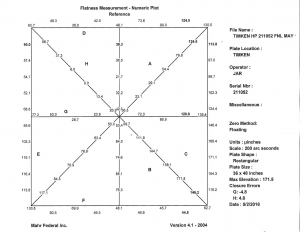
Kuring yakin upami anjeun salah sahiji jalmi anu ngalibrasi pelat anjeun ku kontraktor nganggo autokolimasi, anjeun teu acan kantos ningali halaman-halaman éta! Gambar 3 mangrupikeun conto tinangan hijiKaca dalapan anu diperyogikeun pikeun ngitung rata sakabéhna. Salah sahiji indikasi tina kabodoan sareng niat jahat éta nyaéta upami laporan anjeun gaduh angka anu dibulatkeun kalayan saé. Salaku conto, 200, 400, 650, jsb. Nilai anu diitung kalayan leres nyaéta angka nyata. Salaku conto 325.4 u In. Nalika kontraktor nganggo Métode Moody pikeun itungan, sareng téknisi ngitung nilai sacara manual, anjeun kedah nampi dalapan kaca itungan sareng plot isometrik. Plot isometrik nunjukkeun jangkungna anu béda-béda sapanjang garis anu béda sareng sabaraha jarak anu misahkeun titik-titik anu meuntas anu dipilih.
Gambar 3(Butuh dalapan kaca kawas kieu pikeun ngitung rata sacara manual. Pastikeun anjeun nanya kunaon anjeun teu meunang ieu upami kontraktor anjeun nganggo autokolimasi!)
Gambar 4
Teknisi Gauge Diménsi nganggo tingkat diferensial (Gambar 4) salaku alat anu dipikaresep pikeun ngukur parobahan sudut dina menit ti stasiun pangukuran ka stasiun. Tingkatna gaduh résolusi dugi ka 0,1 detik busur (5 u Inci nganggo sled 4″) anu stabil pisan, henteu kapangaruhan ku geteran, jarak anu diukur, arus hawa, kacapean operator, kontaminasi hawa atanapi masalah naon waé anu aya dina alat sanés. Tambahkeun bantosan komputer, sareng tugasna janten relatif gancang, ngahasilkeun plot topografi sareng isometrik anu ngabuktikeun verifikasi sareng anu paling penting nyaéta perbaikan.
Tés Pangulangan anu Leres
Maca ulang atanapi repeatability mangrupikeun tés anu paling penting. Alat anu kami anggo pikeun ngalaksanakeun tés repeatability nyaéta perlengkapan maca ulang, LVDT sareng amplifier anu diperyogikeun pikeun bacaan résolusi luhur. Kami nyetel amplifier LVDT kana résolusi minimum 10 u Inci atanapi 5 u Inci pikeun pelat akurasi anu luhur.
Ngagunakeun indikator mékanis kalayan résolusi ngan 20 u Inci teu aya gunana upami anjeun nyobian nguji sarat pangulangan 35 u Inci. Indikator gaduh kateupastian 40 u Inci! Setélan maca pangulangan niru konfigurasi alat ukur jangkungna/bagian.
Kabisaulangan TEU sarua jeung karataan sakabéhna (Mean Plane). Abdi resep mikirkeun kabisaulangan dina granit salaku pangukuran radius anu konsisten.
Gambar 5
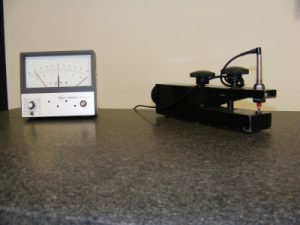
Upami anjeun nguji kamampuan bola buleud, maka anjeun parantos nunjukkeun radius bola henteu robih. (Profil idéal tina pelat anu diropéa kalayan leres ngagaduhan bentuk makuta cembung.) Nanging, jelas yén balna henteu datar. Nya, sapertos kitu. Dina jarak anu pondok pisan, éta datar. Kusabab seuseueurna padamelan pamariksaan ngalibatkeun alat ukur jangkungna anu caket pisan kana bagian éta, kamampuan pikeun ngulang janten sipat anu paling penting tina pelat granit. Langkung penting tibatan ratana sacara umum kecuali pangguna mariksa lempengan bagian anu panjang.
Pastikeun kontraktor anjeun ngalaksanakeun tés maca ulangan. Pelat tiasa gaduh bacaan ulangan anu jauh di luar toleransi tapi tetep lulus tés rata! Anu luar biasa, laboratorium tiasa kéngingkeun akreditasi dina tés anu henteu kalebet tés maca ulangan. Laboratorium anu henteu tiasa ngalereskeun atanapi henteu saé dina ngalereskeun langkung milih ngan ukur ngalaksanakeun tés rata. Rata jarang robih kecuali anjeun mindahkeun pelatna.
Tés maca ulangan mangrupikeun anu paling gampang diuji tapi anu paling hésé kahontal nalika lapping. Pastikeun kontraktor anjeun tiasa mulangkeun kabisaulangan tanpa "ngaruksak" permukaan atanapi ninggalkeun ombak dina permukaan.
Tés Delta-T
Tés ieu ngalibatkeun ngukur suhu SABENERNA batu di permukaan luhur sareng permukaan handapna teras ngitung bédana, Delta T, pikeun dilaporkeun dina sertipikat.
Penting pikeun terang koefisien rata-rata ékspansi termal dina granit nyaéta 3,5 uIn/Inci/derajat. Pangaruh suhu sareng kalembaban lingkungan kana pelat granit teu pati penting. Nanging, pelat permukaan tiasa kaluar tina toleransi atanapi kadang ningkat sanaos dina Delta T 0,3 - 0,5 derajat F. Perlu terang upami Delta T aya dina 0,12 derajat F tina bédana tina kalibrasi terakhir.
Penting ogé pikeun terang yén permukaan kerja pelat migrasi ka arah panas. Upami suhu luhur langkung haneut tibatan handap, maka permukaan luhur naék. Upami handap langkung haneut, anu jarang, maka permukaan luhur tilelep. Teu cekap pikeun manajer kualitas atanapi teknisi pikeun terang pelat datar sareng tiasa diulang dina waktos kalibrasi atanapi perbaikan tapi naon Delta T éta dina waktos uji kalibrasi akhir. Dina kaayaan kritis pangguna tiasa, ku cara ngukur Delta T nyalira, nangtukeun naha pelat parantos kaluar tina toleransi kusabab variasi Delta T. Untungna, granit peryogi sababaraha jam atanapi bahkan dinten pikeun adaptasi sareng lingkungan. Fluktuasi minor dina suhu sekitar sapanjang dinten moal mangaruhan éta. Kusabab alesan ieu, kami henteu ngalaporkeun suhu atanapi kalembaban kalibrasi sekitar sabab pangaruhna tiasa diabaikan.
Pamakéan Pelat Granit
Sanaos granit langkung teuas tibatan pelat baja, granit tetep ngembangkeun bintik-bintik anu handap dina permukaanana. Gerakan bagian sareng alat ukur anu diulang-ulang dina pelat permukaan mangrupikeun sumber karusakan anu paling ageung, khususna upami daérah anu sami terus-terusan dianggo. Kokotor sareng lebu anu dikirangan anu diidinan tetep dina permukaan pelat ngagancangkeun prosés karusakan nalika asup antara bagian atanapi alat ukur sareng permukaan granit. Nalika mindahkeun bagian sareng alat ukur di sakumna permukaanna, lebu abrasif biasana janten panyabab karusakan tambahan. Abdi nyarankeun pisan pikeun beberesih anu terus-terusan pikeun ngirangan karusakan. Kami parantos ningali karusakan dina pelat anu disababkeun ku pangiriman pakét UPS unggal dinten anu disimpen di luhur pelat! Daérah karusakan lokal éta mangaruhan bacaan tés kalibrasi anu tiasa diulang. Hindarkeun karusakan ku cara ngabersihkeun sacara rutin.
Pembersihan Pelat Granit
Pikeun ngajaga piring tetep bersih, anggo lawon paku pikeun miceun kokotor. Pencét enteng pisan, supados anjeun henteu nyésakeun sésa lem. Lawon paku anu sering dianggo ngalakukeun padamelan anu saé pisan pikeun ngumpulkeun lebu anu ngagiling antara beberesih. Ulah dianggo dina tempat anu sami. Pindahkeun setelan anjeun di sakitar piring, sebarkeun karusakan. Henteu kunanaon nganggo alkohol pikeun ngabersihkeun piring, tapi émut yén ngalakukeun éta bakal niiskeun permukaan samentawis. Cai sareng sakedik sabun saé pisan. Pembersih anu sayogi sacara komersil sapertos pembersih Starrett ogé saé dianggo, tapi pastikeun anjeun miceun sadaya sésa sabun tina permukaan.
Perbaikan Pelat Granit
Ayeuna kuduna geus jelas pentingna pikeun mastikeun kontraktor pelat permukaan anjeun ngalakukeun kalibrasi anu kompeten. Laboratorium tipe "Clearing House" anu nawiskeun program "Lakukan sadayana ku hiji panggilan" jarang gaduh teknisi anu tiasa ngalakukeun perbaikan. Sanaos aranjeunna nawiskeun perbaikan, aranjeunna henteu salawasna gaduh teknisi anu gaduh pangalaman anu diperyogikeun nalika pelat permukaan jauh di luar toleransi.
Upami dibéjaan yén pelat teu tiasa dibenerkeun kusabab karusakan anu parah, mangga nelepon kami. Kamungkinan ageung kami tiasa ngalereskeunana.
Teknisi kami damel magang salami hiji dugi ka hiji satengah taun di handapeun Teknisi Master Pelat Permukaan. Kami ngahartikeun Teknisi Master Pelat Permukaan salaku jalma anu parantos réngsé magangna sareng gaduh pangalaman langkung ti sapuluh taun tambahan dina kalibrasi sareng Perbaikan Pelat Permukaan. Kami di Dimensional Gauge gaduh tilu Teknisi Master dina staf kalayan pangalaman langkung ti 60 taun digabungkeun. Salah sahiji Teknisi Master kami sayogi sepanjang waktos pikeun dukungan sareng pituduh nalika kaayaan sesah timbul. Sadaya teknisi kami gaduh pangalaman dina kalibrasi pelat permukaan sadaya ukuran, ti alit dugi ka ageung pisan, kaayaan lingkungan anu béda-béda, industri anu béda, sareng dina masalah keausan utama.
Fed Specs gaduh sarat finish khusus 16 dugi ka 64 Rata-rata Kasar Aritmatika (AA). Kami langkung milih finish dina kisaran 30-35 AA. Aya karasana anu cekap pikeun mastikeun bagian sareng alat ukur gerak lancar sareng henteu nempel atanapi remuk kana pelat permukaan.
Nalika urang ngalereskeun, urang mariksa pelat pikeun masang sareng rata anu leres. Urang nganggo metode lapping garing, tapi dina kasus karusakan anu parah anu meryogikeun panyabutan granit anu ageung, urang nganggo lap baseuh. Teknisi urang ngabersihkeun sorangan, aranjeunna tuntas, gancang sareng tepat. Éta penting sabab biaya jasa pelat granit kalebet downtime anjeun sareng produksi anu leungit. Perbaikan anu kompeten mangrupikeun hal anu paling penting, sareng anjeun henteu kedah milih kontraktor dumasar kana harga atanapi genah. Sababaraha padamelan kalibrasi meryogikeun individu anu dilatih pisan. Kami gaduh éta.
Laporan Kalibrasi Akhir
Pikeun unggal perbaikan sareng kalibrasi pelat permukaan, kami nyayogikeun laporan profésional anu lengkep. Laporan kami ngandung sajumlah ageung inpormasi penting sareng anu aya hubunganana. Fed Spec. meryogikeun kaseueuran inpormasi anu kami pasihan. Henteu kalebet anu aya dina standar kualitas sanés sapertos ISO/IEC-17025, Fed. Spésifikasi minimum pikeun laporan nyaéta:
- Ukuran dina Ft. (X' x X')
- Warna
- Gaya (Nuduhkeun kana sisi anu teu aya jepitan atanapi dua atanapi opat sisi)
- Perkiraan Modulus Élastisitas
- Toleransi Bidang Rata-rata (Ditangtukeun ku Kelas/Ukuran)
- Toleransi bacaan ulang (Ditangtukeun ku panjang diagonal dina inci)
- Bidang Rata-rata sakumaha Kapanggih
- Rata-rata Pesawat di kénca
- Balikan deui maca sakumaha anu kapanggih
- Balikan deui maca sakumaha kénca
- Delta T (Béda suhu antara permukaan luhur sareng handap)
Upami teknisi kedah ngalaksanakeun padamelan lapping atanapi perbaikan kana pelat permukaan, maka sertipikat kalibrasi dibarengan ku plot topografi atanapi isometrik pikeun ngabuktikeun perbaikan anu valid.
Sakeudeung Ngeunaan Akreditasi ISO/IEC-17025 sareng laboratorium anu gaduhna
Ngan kusabab laboratorium gaduh akreditasi dina kalibrasi pelat permukaan teu hartosna aranjeunna terang naon anu aranjeunna lakukeun, apalagi ngalakukeunana kalayan leres! Éta ogé teu hartosna laboratorium tiasa ngalereskeun. Badan akreditasi henteu ngabédakeun antara verifikasi atanapi kalibrasi (perbaikan).Ajeung kuring nyaho hiji, meureun2badan akreditasi anu bakalLdasiApita di sakuriling anjing kuring upami kuring mayar aranjeunna cekap artos! Éta kanyataan anu pikasediheun. Kuring parantos ningali laboratorium kéngingkeun akreditasi ku ngan ukur ngalaksanakeun salah sahiji tina tilu tés anu diperyogikeun. Leuwih ti éta, kuring parantos ningali laboratorium kéngingkeun akreditasi kalayan kateupastian anu teu réalistis sareng kéngingkeun akreditasi tanpa bukti atanapi démo kumaha aranjeunna ngitung nilaina. Éta sadayana hanjakal.
Penjumlahan
Anjeun teu tiasa nganggap enteng peran pelat granit anu presisi. Acuan datar anu disayogikeun ku pelat granit mangrupikeun pondasi pikeun anjeun ngadamel sadaya pangukuran anu sanés.
Anjeun tiasa nganggo alat ukur anu paling modéren, paling akurat, sareng paling serbaguna. Nanging, pangukuran anu akurat hésé dipastikeun upami permukaan rujukan henteu rata. Hiji waktos, aya calon palanggan anu nyarios ka abdi "nya éta ngan ukur batu!" Jawaban abdi, "Muhun, anjeun leres, sareng anjeun pasti teu tiasa menerkeun upami aya ahli anu sumping pikeun ngajaga pelat permukaan anjeun."
Harga lain alesan anu saé pikeun milih kontraktor pelat permukaan. Pembeli, akuntan, sareng sajumlah insinyur anu kualitasna goréng henteu salawasna ngartos yén sertifikasi ulang pelat granit henteu sapertos sertifikasi ulang mikrométer, kaliper, atanapi DMM.
Sababaraha instrumen meryogikeun kaahlian, sanés harga anu murah. Saatos nyarios kitu, tarif kami lumayan murah. Utamana kusabab yakin yén kami ngalaksanakeun padamelan kalayan leres. Kami ngaleuwihan sarat ISO-17025 sareng Spésifikasi Féderal dina hal nilai tambah.
Pelat permukaan mangrupikeun dasar pikeun seueur pangukuran diménsi, sareng ngarawat pelat permukaan anjeun kalayan leres diperyogikeun pikeun mastikeun akurasi pangukuran.
Granit nyaéta bahan anu paling populér anu dianggo pikeun pelat permukaan kusabab ciri fisikna anu idéal, sapertos karasana permukaan sareng sensitivitas anu handap kana fluktuasi suhu. Nanging, kalayan terus dianggo pelat permukaan ngalaman karusakan.
Karataan sareng kabisaulangan mangrupikeun aspék anu penting pikeun nangtukeun naha hiji pelat nyayogikeun permukaan anu tepat pikeun kéngingkeun pangukuran anu akurat. Toleransi pikeun dua aspék ditetepkeun dina Spésifikasi Féderal GGG-P-463C, DIN, GB, JJS... Karataan nyaéta pangukuran jarak antara titik pangluhurna (bidang hateup) sareng titik panghandapna (bidang dasar) dina pelat. Kabisaulangan nangtukeun naha pangukuran anu dicandak tina hiji daérah tiasa diulang di sakumna pelat dina toleransi anu ditetepkeun. Ieu mastikeun yén teu aya puncak atanapi lebak dina pelat. Upami bacaan henteu dina pedoman anu ditetepkeun, maka pelapisan ulang tiasa diperyogikeun pikeun mulangkeun pangukuran kana spésifikasi.
Kalibrasi pelat permukaan rutin diperyogikeun pikeun mastikeun kerataan sareng kabisaulangan kana waktosna. Grup pangukuran presisi di Cross diakreditasi ISO 17025 pikeun kalibrasi kerataan sareng kabisaulangan pelat permukaan. Kami nganggo Sistem Sertifikasi Pelat Permukaan Mahr anu nampilkeun:
- Moody sareng Analisis Profil,
- Plot isometrik atanapi numerik,
- Rata-rata Lumpat Sababaraha, sareng
- Grading Otomatis Numutkeun Standar Industri.
Modél Bantuan Komputer Mahr nangtukeun simpangan sudut atanapi linier tina tingkat absolut, sareng cocog pisan pikeun profil pelat permukaan anu akurat pisan.
Interval antara kalibrasi bakal béda-béda gumantung kana frékuénsi panggunaan, kaayaan lingkungan tempat pelat ayana, sareng sarat kualitas khusus perusahaan anjeun. Ngarawat pelat permukaan anjeun kalayan leres tiasa ngamungkinkeun interval anu langkung lami antara unggal kalibrasi, ngabantosan anjeun nyingkahan biaya tambahan tina relapping, sareng anu paling penting mastikeun pangukuran anu anjeun kéngingkeun dina pelat saakurat mungkin. Sanaos pelat permukaan katingalina kuat, éta mangrupikeun instrumen anu presisi sareng kedah diperlakukeun sapertos kitu. Ieu sababaraha hal anu kedah dipertimbangkeun ngeunaan perawatan pelat permukaan anjeun:
- Jaga piring tetep bersih, sareng upami tiasa tutup nalika teu dianggo
- Teu aya nanaon anu kedah disimpen dina pelat iwal ti alat ukur atanapi barang anu badé diukur.
- Ulah make tempat anu sarua dina piring unggal waktu.
- Upami tiasa, puterkeun pelat sacara périodik.
- Hormati wates beban pelat anjeun
Dasar Granit Presisi Tiasa Ningkatkeun Performa Pakakas Mesin
Sarat terus ningkat dina rékayasa mékanis sacara umum sareng dina konstruksi mesin perkakas khususna. Ngahontal presisi sareng nilai kinerja maksimum tanpa ningkatkeun biaya mangrupikeun tantangan anu terus-terusan pikeun janten kompetitif. Ranjang mesin perkakas mangrupikeun faktor anu nangtukeun di dieu. Ku alatan éta, beuki seueur produsén mesin perkakas anu ngandelkeun granit. Kusabab parameter fisikna, éta nawiskeun kaunggulan anu jelas anu teu tiasa kahontal ku baja atanapi beton polimér.
Granit nyaéta anu disebut batuan jero vulkanik sareng gaduh struktur anu padet pisan sareng homogen kalayan koefisien ékspansi anu handap pisan, konduktivitas termal anu handap sareng redaman geter anu luhur.
Di handap ieu anjeun bakal mendakan kunaon pamanggih umum yén granit utamina ngan ukur cocog salaku dasar mesin pikeun mesin pangukur koordinat kelas luhur parantos lami teu dianggo sareng kunaon bahan alami ieu salaku dasar alat mesin mangrupikeun alternatif anu nguntungkeun pisan pikeun baja atanapi beusi tuang bahkan pikeun alat mesin presisi tinggi.
Urang tiasa ngadamel komponén granit pikeun gerakan dinamis, komponén granit pikeun motor linier, komponén granit pikeun ndt, komponén granit pikeun x-ray, komponén granit pikeun cmm, komponén granit pikeun cnc, granit presisi pikeun laser, komponén granit pikeun aerospace, komponén granit pikeun tahapan presisi...
Nilai Tambah Luhur Tanpa Biaya Tambahan
Ningkatna panggunaan granit dina rékayasa mékanis sanés kusabab kanaékan harga baja anu ageung. Sabalikna, éta kusabab nilai tambah pikeun mesin perkakas anu kahontal ku ranjang mesin anu didamel tina granit tiasa dilakukeun kalayan biaya tambahan anu sakedik pisan atanapi tanpa biaya tambahan. Ieu dibuktikeun ku babandingan biaya produsén mesin perkakas anu terkenal di Jerman sareng Éropa.
Kauntungan anu lumayan dina stabilitas termodinamika, redaman geter, sareng presisi jangka panjang anu dimungkinkeun ku granit teu tiasa kahontal ku beusi cor atanapi ranjang baja, atanapi ngan ukur ku biaya anu relatif luhur. Salaku conto, kasalahan termal tiasa nyababkeun dugi ka 75% tina total kasalahan mesin, kalayan kompensasi anu sering dicobian ku parangkat lunak - kalayan kasuksésan sedeng. Kusabab konduktivitas termalna anu handap, granit mangrupikeun pondasi anu langkung saé pikeun presisi jangka panjang.
Kalayan toleransi 1 μm, granit gampang nyumponan sarat kerataan numutkeun DIN 876 pikeun tingkat akurasi 00. Kalayan nilai 6 dina skala karasa 1 dugi ka 10, éta téh teuas pisan, sareng kalayan beurat spésifikna 2.8g/cm³ ampir ngahontal nilai aluminium. Ieu ogé ngahasilkeun kaunggulan tambahan sapertos laju asupan anu langkung luhur, akselerasi sumbu anu langkung luhur sareng manjangkeun umur pakakas pikeun motong pakakas mesin. Ku kituna, parobahan tina ranjang cor ka ranjang mesin granit mindahkeun pakakas mesin anu dimaksud kana kelas luhur dina hal presisi sareng kinerja - tanpa biaya tambahan.
Tapak Ékologis Granit anu Ditingkatkeun
Beda sareng bahan sapertos baja atanapi beusi tuang, batu alam henteu kedah diproduksi nganggo énergi anu ageung sareng nganggo aditif. Ngan jumlah énergi anu relatif alit anu diperyogikeun pikeun ngagali sareng ngolah permukaan. Ieu ngahasilkeun tapak suku ékologis anu unggul, anu bahkan dina ahir umur mesin ngaleuwihan baja salaku bahan. Lapisan granit tiasa janten dasar pikeun mesin énggal atanapi dianggo pikeun tujuan anu béda pisan sapertos ngarecah pikeun konstruksi jalan.
Batu granit ogé teu kakurangan sumber daya. Éta mangrupikeun batu anu jero anu kabentuk tina magma dina kerak bumi. Éta parantos 'matang' salami jutaan taun sareng sayogi dina jumlah anu ageung salaku sumber daya alam di ampir sadaya buana, kalebet sakumna Éropa.
Kacindekan: Seueurna kaunggulan granit anu tiasa dibuktikeun dibandingkeun sareng baja atanapi beusi tuang menerkeun ningkatna karep insinyur mékanis pikeun nganggo bahan alami ieu salaku pondasi pikeun mesin perkakas anu presisi tinggi sareng kinerja tinggi. Inpormasi lengkep ngeunaan sipat granit, anu nguntungkeun pikeun mesin perkakas sareng rékayasa mékanis, tiasa dipendakan dina tulisan salajengna ieu.
Pangukuran ulang nyaéta pangukuran daérah datar lokal. Spésifikasi Pangukuran Ulang nyatakeun yén pangukuran anu dilakukeun di mana waé dina permukaan pelat bakal diulang dina toleransi anu ditetepkeun. Ngontrol datar daérah lokal anu langkung ketat tibatan datar sacara umum ngajamin parobahan laun dina profil datar permukaan sahingga ngaminimalkeun kasalahan lokal.
Kaseueuran pabrik, kalebet merek impor, taat kana Spésifikasi Féderal ngeunaan toleransi kerataan sacara umum tapi seueur anu teu malire pangukuran anu diulang. Seueur pelat anu hargana murah atanapi murah anu sayogi di pasar ayeuna moal ngajamin pangukuran anu diulang. Pabrik anu henteu ngajamin pangukuran anu diulang HENTEU ngahasilkeun pelat anu nyumponan sarat ASME B89.3.7-2013 atanapi Spésifikasi Féderal GGG-P-463c, atanapi DIN 876, GB, JJS...
Duanana penting pisan pikeun mastikeun permukaan anu presisi pikeun pangukuran anu akurat. Spésifikasi kerataan nyalira teu cekap pikeun ngajamin akurasi pangukuran. Candak conto, pelat permukaan Kelas Inspeksi A 36 X 48, anu ngan ukur nyumponan spésifikasi kerataan .000300". Upami potongan anu dipariksa ngahubungkeun sababaraha puncak, sareng alat ukur anu dianggo aya dina titik anu handap, kasalahan pangukuran tiasa janten toleransi pinuh dina hiji daérah, 000300"! Sabenerna, éta tiasa langkung luhur upami alat ukur aya dina lamping tanjakan.
Kasalahan .000600"-.000800" tiasa waé kajadian, gumantung kana parahna lamping, sareng panjang leungeun alat ukur anu dianggo. Upami pelat ieu gaduh spésifikasi Pangukuran Ulangan .000050"FIR maka kasalahan pangukuran bakal kirang ti .000050" henteu paduli dimana pangukuran dilaksanakeun dina pelat. Masalah sanésna, anu biasana timbul nalika téknisi anu teu terlatih nyobian masang deui pelat di tempat, nyaéta panggunaan Pangukuran Ulangan nyalira pikeun mastikeun pelat.
Instrumen anu dianggo pikeun mastikeun katerulangan TEU dirancang pikeun mariksa kerataan sacara umum. Nalika disetel ka nol dina permukaan anu melengkung sampurna, éta bakal teras maca nol, naha permukaan éta datar sampurna atanapi cekung sampurna atanapi cembung 1/2"! Éta ngan saukur mastikeun keseragaman permukaan, sanés kerataan. Ngan pelat anu nyumponan spésifikasi kerataan SARENG spésifikasi pangukuran pangulangan anu leres-leres nyumponan sarat ASME B89.3.7-2013 atanapi Spésifikasi Féderal GGG-P-463c.
Ask us about or flatness specification and repeat measurement promise by calling +86 19969991659 or emailing INFO@ZHHIMG.COM
Muhun, tapi éta ngan ukur tiasa dijamin pikeun gradien suhu vertikal anu khusus. Pangaruh ékspansi termal dina pelat tiasa kalayan gampang nyababkeun parobahan akurasi anu langkung ageung tibatan toleransi upami aya parobahan dina gradien. Dina sababaraha kasus, upami toleransi cukup ketat, panas anu diserep tina cahaya overhead tiasa nyababkeun parobahan gradien anu cekap salami sababaraha jam.
Granit mibanda koéfisién ékspansi termal kira-kira .0000035 inci per inci per 1°F. Salaku conto: Pelat permukaan 36" x 48" x 8" mibanda akurasi .000075" (1/2 tina Kelas AA) dina gradien 0°F, suhu luhur sareng handapna sami. Upami luhur pelat haneut dugi ka titik dimana 1°F langkung haneut tibatan handap, akurasina bakal robih janten .000275" cembung! Ku alatan éta, mesen pelat kalayan toleransi anu langkung ketat tibatan Kelas Laboratorium AA ngan ukur kedah dipertimbangkeun upami aya kontrol iklim anu nyukupan.
Pelat permukaan kedah dirojong dina 3 titik, idéalna aya 20% tina panjangna ti tungtung pelat. Dua pangrojong kedah ditempatkeun 20% tina lébarna ti sisi anu panjang, sareng pangrojong sésana kedah aya di tengah. Ngan 3 titik anu tiasa nangtung pageuh dina naon waé kecuali permukaan anu presisi.
Pelat kedah dirojong dina titik-titik ieu salami produksi, sareng éta kedah dirojong ngan ukur dina tilu titik ieu nalika dianggo. Nyobian ngadukung pelat di langkung ti tilu titik bakal nyababkeun pelat nampi dukunganana tina rupa-rupa kombinasi tilu titik, anu moal sami sareng 3 titik anu sami nalika didukung nalika produksi. Ieu bakal nyababkeun kasalahan nalika pelat ngabengkok pikeun saluyu sareng susunan dukungan anu énggal. Sadaya dudukan baja zhhimg gaduh balok dukungan anu dirancang pikeun sajajar sareng titik dukungan anu leres.
Upami pelatna ditopang kalayan leres, perataan anu tepat ngan diperyogikeun upami aplikasi anjeun meryogikeunana. Perataan henteu diperyogikeun pikeun ngajaga akurasi pelat anu ditopang kalayan leres.
Naha milih granit pikeunBasis MesinjeungKomponen Metrologi?
Jawabanna 'enya' pikeun ampir unggal aplikasi. Kaunggulan granit diantarana: Henteu aya karat atanapi korosi, ampir tahan kana bengkok, henteu aya punuk anu ngimbangan nalika digerus, umur pakai anu langkung lami, aksi anu langkung lancar, presisi anu langkung ageung, ampir henteu magnét, koefisien ékspansi termal anu handap, sareng biaya perawatan anu handap.
Granit nyaéta jenis batuan beku anu digali kusabab kakuatan, kapadetan, daya tahan, sareng résistansi anu ekstrim kana korosi. Tapi granit ogé serbaguna pisan - éta henteu ngan ukur pikeun pasagi sareng pasagi panjang! Kanyataanna, Starrett Tru-Stone kalayan percaya diri damel sareng komponén granit anu direkayasa dina bentuk, sudut, sareng kurva tina sagala variasi sacara rutin - kalayan hasil anu saé pisan.
Ngaliwatan pamrosésan canggih kami, permukaan anu dipotong tiasa janten rata pisan. Kualitas ieu ngajantenkeun granit bahan anu idéal pikeun nyiptakeun dasar mesin sareng komponén métrologi ukuran khusus sareng desain khusus. Granit nyaéta:
bisa dimesin
rata pisan nalika dipotong sareng réngsé
tahan karat
awét
awét
Komponen granit ogé gampang dibersihkeun. Nalika nyieun desain khusus, pastikeun milih granit pikeun kauntungan anu unggul.
STANDAR/ APLIKASI KEGUNAAN TINGGI
Granit anu dianggo ku ZhongHui pikeun produk pelat permukaan standar kami ngagaduhan kandungan kuarsa anu luhur, anu nyayogikeun résistansi anu langkung ageung kana karusakan sareng karusakan. Warna Hideung sareng Kristal Pink Superior kami ngagaduhan tingkat panyerepan cai anu handap, ngaminimalkeun kamungkinan alat ukur presisi anjeun karat nalika dipasang dina pelat. Warna granit anu ditawarkeun ku ZhongHui ngahasilkeun kirang silau, anu hartosna kirang kacapean panon pikeun individu anu nganggo pelat. Kami parantos milih jinis granit kami bari mertimbangkeun ékspansi termal dina upaya pikeun ngajaga aspék ieu minimal.
APLIKASI KHUSUS
Nalika aplikasi anjeun meryogikeun pelat kalayan bentuk khusus, sisipan ulir, slot atanapi pamrosésan anu sanés, anjeun kedah milih bahan sapertos Black Diabase. Bahan alami ieu nawiskeun kaku anu unggul, peredam geter anu saé, sareng kamampuan pamrosésan anu ditingkatkeun.
Muhun, upami éta henteu ruksak parah teuing. Setélan sareng peralatan pabrik kami ngamungkinkeun kaayaan optimal pikeun kalibrasi pelat anu leres sareng ngolah deui upami diperyogikeun. Sacara umum, upami pelat aya dina 0,001" tina toleransi anu diperyogikeun, éta tiasa dilapis ulang di tempat. Upami pelat ruksak dugi ka titik dimana langkung ti 0,001" di luar toleransi, atanapi upami aya liang atanapi sobek anu parah, maka éta kedah dikirim ka pabrik pikeun digiling sateuacan dipasang deui.
Kudu ati-ati pisan dina milih teknisi kalibrasi sareng resurfacing di tempat. Kami ngadesek anjeun pikeun ati-ati dina milih jasa kalibrasi anjeun. Nyuhunkeun akreditasi sareng verifikasi alat anu bakal dianggo ku teknisi gaduh kalibrasi Lembaga Inspeksi Nasional anu tiasa dilacak. Butuh sababaraha taun pikeun diajar kumaha cara ngalapis granit presisi kalayan leres.
ZhongHui nyayogikeun prosés kalibrasi anu gancang anu dilakukeun di pabrik kami. Kirimkeun pelat anjeun pikeun kalibrasi upami tiasa. Kualitas sareng reputasi anjeun gumantung kana akurasi alat ukur anjeun kalebet pelat permukaan!
Pelat permukaan hideung urang gaduh kapadetan anu langkung luhur sareng dugi ka tilu kali langkung kaku. Ku kituna, pelat anu didamel tina hideung henteu kedah kandel sapertos pelat granit anu ukuranana sami pikeun gaduh résistansi anu sami atanapi langkung ageung kana defleksi. Kandel anu dikirangan hartosna beurat anu langkung alit sareng biaya pengiriman anu langkung handap.
Ati-ati ka batur anu nganggo granit hideung kualitas handap dina ketebalan anu sami. Sakumaha anu parantos disebatkeun di luhur, sipat granit, sapertos kai atanapi logam, bénten-bénten dumasar kana bahan sareng warna, sareng sanés prediktor anu akurat ngeunaan kaku, karasa, atanapi résistansi kana goresan. Nyatana, seueur jinis granit hideung sareng diabase lemes pisan sareng henteu cocog pikeun aplikasi pelat permukaan.
Henteu. Peralatan sareng pelatihan khusus anu diperyogikeun pikeun ngolah deui barang-barang ieu meryogikeun barang-barang éta dipulangkeun deui ka pabrik pikeun kalibrasi sareng ngolah deui.
Muhun. Keramik sareng granit gaduh ciri anu sami, sareng metode anu dianggo pikeun ngalibrasi sareng ngusap granit ogé tiasa dianggo sareng barang-barang keramik. Keramik langkung sesah diusap tibatan granit anu nyababkeun biaya anu langkung luhur.
Muhun, salami sisipanna dicerek di handapeun permukaan. Upami sisipan baja rata sareng, atanapi di luhur bidang permukaan, éta kedah diukir heula sateuacan pelat tiasa dilipat. Upami diperyogikeun, kami tiasa nyayogikeun jasa éta.
Muhun. Sisipan baja kalayan ulir anu dipikahoyong (Inggris atanapi métrik) tiasa dihijikeun ku époksi kana pelat di lokasi anu dipikahoyong. ZhongHui nganggo mesin CNC pikeun nyayogikeun lokasi sisipan anu paling pageuh dina +/- 0,005”. Pikeun sisipan anu kirang kritis, toleransi lokasional kami pikeun sisipan anu diulir nyaéta ±.060”. Pilihan sanésna kalebet T-Bar baja sareng slot dovetail anu dimesin langsung kana granit.
Sisipan anu dihijikeun kalayan leres nganggo epoksi kakuatan tinggi sareng padamelan anu saé bakal tahan seueur gaya torsi sareng geser. Dina tés anu nembe dilakukeun, nganggo sisipan ulir 3/8"-16, laboratorium uji mandiri ngukur gaya anu diperyogikeun pikeun narik sisipan anu dihijikeun ku epoksi tina pelat permukaan. Sapuluh pelat diuji. Tina sapuluh ieu, dina salapan kasus, granit retak heula. Beban rata-rata dina titik kagagalan nyaéta 10.020 lbs. pikeun granit kulawu sareng 12.310 lbs. pikeun hideung. Dina hiji kasus dimana sisipan ditarik tina pelat, beban dina titik kagagalan nyaéta 12.990 lbs.! Upami benda kerja ngabentuk sasak di sakuliah sisipan sareng torsi ekstrim diterapkeun, dimungkinkeun pikeun ngahasilkeun gaya anu cekap pikeun meulah granit. Sabagian kusabab alesan ieu, ZhongHui masihan pedoman pikeun torsi aman maksimum anu tiasa diterapkeun dina sisipan anu dihijikeun ku epoksi: https://www.zhhimg.com/standard-thread-inserts-product/
Muhun, tapi ngan ukur di pabrik kami. Di pabrik kami, kami tiasa mulangkeun ampir sadaya pelat kana kaayaan 'sapertos énggal', biasana kirang ti satengah biaya ngagantina. Tepi anu ruksak tiasa ditambal sacara kosmetik, alur anu jero, goresan, sareng liang tiasa digiling, sareng dukungan anu napel tiasa diganti. Salaku tambahan, kami tiasa ngarobih pelat anjeun pikeun ningkatkeun versatility na ku nambihan sisipan baja padet atanapi ulir sareng motong slot atanapi biwir clamp, numutkeun spésifikasi anjeun.
Naha Milih Granit?
Granit nyaéta jenis batuan beku anu kabentuk di Bumi jutaan taun ka tukang. Komposisi batuan beku ngandung seueur mineral sapertos kuarsa anu teuas pisan sareng tahan aus. Salian ti karasana sareng tahan aus, granit ngagaduhan sakitar satengah koefisien ékspansi sapertos beusi tuang. Kusabab beurat volumetrikna sakitar sapertiluna beusi tuang, granit langkung gampang digerakkeun.
Pikeun dasar mesin sareng komponén métrologi, granit hideung nyaéta warna anu paling sering dianggo. Granit hideung ngagaduhan persentase kuarsa anu langkung luhur tibatan warna sanés sareng ku kituna, paling sesah dianggo.
Granit téh hemat biaya, sarta beungeut anu dipotong bisa jadi rata pisan. Éta teu ngan ukur bisa di-lap ku leungeun pikeun ngahontal akurasi anu ekstrim, tapi ogé pangkondisian ulang bisa dilakukeun tanpa mindahkeun pelat atawa méja ka luar lokasi. Éta sagemblengna operasi lapping ku leungeun sarta umumna hargana leuwih murah tibatan pangkondisian ulang alternatif beusi cor.
Kualitas-kualitas ieu ngajantenkeun granit bahan anu idéal pikeun nyiptakeun dasar mesin sareng komponén métrologi ukuran khusus sareng desain khusus sapertospelat permukaan granit.
ZhongHui ngahasilkeun produk granit anu dijieun khusus pikeun ngadukung sarat pangukuran khusus. Barang-barang anu dijieun khusus ieu rupa-rupa tisisi lempeng totilu pasagiKusabab sipat granit anu serbaguna,komponénbisa diproduksi kana ukuran naon waé anu diperyogikeun; awét sareng awét.
Kaunggulan Pelat Permukaan Granit
Pentingna ngukur dina permukaan anu rata ditetepkeun ku panemu Inggris Henry Maudsley dina taun 1800-an. Salaku inovator pakakas mesin, anjeunna nangtukeun yén produksi suku cadang anu konsisten meryogikeun permukaan anu padet pikeun pangukuran anu tiasa dipercaya.
Révolusi industri nyiptakeun paménta pikeun ngukur permukaan, janten perusahaan rékayasa Crown Windley nyiptakeun standar manufaktur. Standar pikeun pelat permukaan mimiti ditetepkeun ku Crown dina taun 1904 nganggo logam. Nalika paménta sareng biaya logam ningkat, bahan alternatif pikeun ngukur permukaan ditalungtik.
Di Amérika, panyipta monumen Wallace Herman netepkeun yén granit hideung mangrupikeun alternatif bahan pelat permukaan anu saé pikeun logam. Kusabab granit henteu magnét sareng henteu karat, éta gancang janten permukaan pangukur anu dipikaresep.
Pelat permukaan granit mangrupikeun investasi penting pikeun laboratorium sareng fasilitas uji. Pelat permukaan granit 600 x 600 mm tiasa dipasang dina dudukan pendukung. Dudukan ieu nyayogikeun jangkungna kerja 34” (0,86m) kalayan lima titik anu tiasa disaluyukeun pikeun diratakeun.
Pikeun hasil pangukuran anu tiasa dipercaya sareng konsisten, pelat permukaan granit penting pisan. Kusabab permukaanna rata sareng stabil, éta ngamungkinkeun instrumen dimanipulasi sacara saksama.
Kaunggulan utama pelat permukaan granit nyaéta:
• Henteu ngagambarkeun
• Tahan kana bahan kimia sareng korosi
• Koefisien ékspansi anu handap dibandingkeun sareng beusi karanjang janten kirang kapangaruhan ku parobahan suhu
• Sacara alami kaku sareng awét
• Bilah beungeut teu kapangaruhan upami digores
• Moal karat
• Henteu magnét
• Gampang dibersihkeun sareng dirawat
• Kalibrasi sareng pelapisan ulang tiasa dilakukeun di tempat
• Cocog pikeun ngebor sisipan pangrojong anu diulir
• Peredam geter anu luhur
Pikeun seueur bengkel, rohangan pamariksaan sareng laboratorium, pelat permukaan granit presisi dianggo salaku dasar pikeun pangukuran anu akurat. Kusabab unggal pangukuran linier gumantung kana permukaan rujukan anu akurat tina mana diménsi ahir dicandak, pelat permukaan nyayogikeun bidang rujukan anu pangsaéna pikeun pamariksaan sareng tata letak padamelan sateuacan dimesin. Éta ogé mangrupikeun dasar anu idéal pikeun ngadamel pangukuran jangkungna sareng permukaan gaging. Salajengna, tingkat kerataan, stabilitas, kualitas sakabéhna sareng padamelan anu luhur ngajantenkeun éta pilihan anu saé pikeun masang sistem gaging mékanis, éléktronik sareng optik anu canggih. Pikeun prosés pangukuran ieu, penting pikeun ngajaga pelat permukaan dikalibrasi.
Pangukuran Ulang sareng Karataan
Pangukuran rata jeung pangulangan duanana penting pisan pikeun mastikeun permukaan anu presisi. Rata bisa dianggap salaku sadaya titik dina permukaan anu aya dina dua bidang sajajar, bidang dasar jeung bidang hateup. Pangukuran jarak antara bidang nyaéta rata sakabéh permukaan. Pangukuran rata ieu umumna mibanda toleransi jeung bisa ngawengku sebutan kelas.
Toleransi kerataan pikeun tilu tingkatan standar ditetepkeun dina spésifikasi féderal sakumaha anu ditangtukeun ku rumus ieu:
Kelas Laboratorium AA = (40 + diagonal² / 25) x 0,000001 inci (unilateral)
Kelas Inspeksi A = Kelas Laboratorium AA x 2
Kelas Ruang Pakakas B = Kelas Laboratorium AA x 4
Salian ti kerataan, katerulangan ogé kedah dipastikeun. Pangukuran ulang nyaéta pangukuran daérah kerataan lokal. Éta mangrupikeun pangukuran anu dilakukeun di mana waé dina permukaan pelat anu bakal diulang dina toleransi anu ditetepkeun. Ngontrol kerataan daérah lokal kana toleransi anu langkung ketat tibatan kerataan sacara umum ngajamin parobahan laun dina profil kerataan permukaan, sahingga ngaminimalkeun kasalahan lokal.
Pikeun mastikeun pelat permukaan nyumponan spésifikasi pangukuran rata sareng pangukuran anu diulang, produsén pelat permukaan granit kedah nganggo Spésifikasi Federal GGG-P-463c salaku dasar pikeun spésifikasina. Standar ieu ngabahas akurasi pangukuran anu diulang, sipat bahan granit pelat permukaan, hasil akhir permukaan, lokasi titik pangrojong, kaku, metode pamariksaan anu tiasa ditampi sareng pamasangan sisipan anu diulir.
Sateuacan pelat permukaan geus aus ngaleuwihan spésifikasi pikeun tingkat kerataan sakabéhna, éta bakal némbongkeun tihang anu aus atanapi bergelombang. Inspeksi bulanan pikeun kasalahan pangukuran anu diulang nganggo alat ukur maca anu diulang bakal ngaidentipikasi titik-titik aus. Alat ukur maca anu diulang nyaéta instrumen presisi tinggi anu ngadeteksi kasalahan lokal sareng tiasa ditampilkeun dina amplifier éléktronik pembesaran tinggi.
Mariksa Akurasi Pelat
Ku nuturkeun sababaraha pedoman saderhana, investasi dina pelat permukaan granit kedah tahan salami mangtaun-taun. Gumantung kana panggunaan pelat, lingkungan bengkel sareng akurasi anu diperyogikeun, frékuénsi mariksa akurasi pelat permukaan béda-béda. Aturan umum nyaéta pelat énggal kedah nampi kalibrasi ulang lengkep dina sataun saatos pameseran. Upami pelat sering dianggo, disarankeun pikeun ngirangan interval ieu janten genep bulan.
Sateuacan pelat permukaan geus aus ngaleuwihan spésifikasi pikeun tingkat kerataan sakabéhna, éta bakal némbongkeun tihang anu aus atanapi bergelombang. Inspeksi bulanan pikeun kasalahan pangukuran anu diulang nganggo alat ukur maca anu diulang bakal ngaidentipikasi titik-titik aus. Alat ukur maca anu diulang nyaéta instrumen presisi tinggi anu ngadeteksi kasalahan lokal sareng tiasa ditampilkeun dina amplifier éléktronik pembesaran tinggi.
Program pamariksaan anu efektif kedah ngawengku pamariksaan rutin nganggo autokolimator, anu nyayogikeun kalibrasi anu saleresna tina kerataan sakabéhna anu tiasa dilacak ka Institut Standar sareng Téknologi Nasional (NIST). Kalibrasi komprehensif ku produsén atanapi perusahaan mandiri diperyogikeun ti waktos ka waktos.
Variasi Antara Kalibrasi
Dina sababaraha kasus, aya variasi antara kalibrasi pelat permukaan. Kadang-kadang faktor sapertos parobahan permukaan anu disababkeun ku karusakan, panggunaan alat pamariksaan anu salah atanapi panggunaan alat anu henteu dikalibrasi tiasa nyababkeun variasi ieu. Nanging, dua faktor anu paling umum nyaéta suhu sareng pangrojong.
Salah sahiji variabel anu paling penting nyaéta suhu. Salaku conto, permukaan panginten parantos dikumbah ku larutan panas atanapi tiis sateuacan kalibrasi sareng henteu dibéré waktos anu cekap pikeun normalisasi. Sabab-sabab sanés tina parobahan suhu kalebet angin tiis atanapi panas, sinar panonpoé langsung, cahaya di luhur atanapi sumber panas radiasi anu sanés dina permukaan pelat.
Ogé tiasa aya variasi dina gradien suhu vertikal antara usum tiris sareng usum panas. Dina sababaraha kasus, pelat henteu dibéré waktos anu cekap pikeun normalisasi saatos pangiriman. Mangrupikeun ide anu saé pikeun ngarékam suhu gradien vertikal nalika kalibrasi dilaksanakeun.
Panyabab umum anu sanés pikeun variasi kalibrasi nyaéta pelat anu henteu didukung kalayan leres. Pelat permukaan kedah didukung dina tilu titik, idéalna aya 20% tina panjangna ti tungtung pelat. Dua pangrojong kedah aya 20% tina lébar ti sisi anu panjang, sareng pangrojong sésana kedah aya di tengah.
Ngan tilu titik anu tiasa nangtung pageuh dina naon waé kecuali permukaan anu presisi. Nyobian ngadukung pelat di langkung ti tilu titik bakal nyababkeun pelat nampi dukunganana tina rupa-rupa kombinasi tilu titik, anu moal janten tilu titik anu sami anu ditopang nalika produksi. Ieu bakal nyababkeun kasalahan nalika pelat ngabengkok pikeun saluyu sareng susunan dukungan anu énggal. Pertimbangkeun nganggo dudukan baja kalayan balok dukungan anu dirancang pikeun sajajar sareng titik dukungan anu leres. Dudukan pikeun tujuan ieu umumna sayogi ti produsén pelat permukaan.
Upami pelatna ditopang kalayan leres, perataan anu tepat ngan diperyogikeun upami aya aplikasi anu nangtukeunana. Perataan henteu diperyogikeun pikeun ngajaga akurasi pelat anu ditopang kalayan leres.
Penting pikeun ngajaga pelat tetep bersih. Lebu abrasif anu kasebar di udara biasana mangrupikeun sumber karusakan pelat anu paling ageung, sabab condong nempel dina benda kerja sareng permukaan kontak alat ukur. Tutup pelat pikeun ngajagaan tina lebu sareng karusakan. Umur pakai tiasa diperpanjang ku cara nutupan pelat nalika henteu dianggo.
Manjangkeun Umur Pelat
Nuturkeun sababaraha pedoman bakal ngirangan karusakan dina pelat permukaan granit sareng pamustunganana, manjangkeun umurna.
Mimitina, penting pikeun ngajaga pelat tetep bersih. Lebu abrasif anu ngalayang di udara biasana mangrupikeun sumber karusakan sareng cimata anu paling ageung dina pelat, sabab condong nempel dina benda kerja sareng permukaan kontak alat ukur.
Penting ogé pikeun nutupan pelat pikeun ngajaga tina lebu sareng karusakan. Umur pakai tiasa diperpanjang ku cara nutupan pelat nalika henteu dianggo.
Puterkeun pelat sacara périodik supados hiji daérah henteu dianggo kaleuleuwihi. Ogé, disarankeun pikeun ngagentos bantalan kontak baja dina gaging ku bantalan karbida.
Ulah neundeun kadaharan atanapi inuman ringan dina piring. Seueur inuman ringan ngandung asam karbonat atanapi fosfat, anu tiasa ngaleyurkeun mineral anu langkung lemes sareng nyésakeun liang alit dina permukaanana.
Tempat pikeun Relap
Nalika pelat permukaan granit peryogi diropéa, pertimbangkeun naha jasa ieu kedah dilaksanakeun di tempat atanapi di fasilitas kalibrasi. Langkung saé upami pelat dipasang deui di pabrik atanapi fasilitas khusus. Nanging, upami pelatna henteu ruksak parah, umumna dina 0,001 inci tina toleransi anu diperyogikeun, éta tiasa diropéa di tempat. Upami pelat ruksak dugi ka langkung ti 0,001 inci tina toleransi, atanapi upami aya liang atanapi sobekan anu parah, maka éta kedah dikirim ka pabrik pikeun digiling sateuacan dipasang deui.
Fasilitas kalibrasi ngagaduhan peralatan sareng setélan pabrik anu nyayogikeun kaayaan optimal pikeun kalibrasi pelat anu leres sareng ngolah deui upami diperyogikeun.
Kudu ati-ati pisan dina milih teknisi kalibrasi sareng resurfacing di tempat. Nyuhunkeun akreditasi sareng verifikasi alat anu bakal dianggo ku teknisi gaduh kalibrasi anu tiasa dilacak NIST. Pangalaman ogé mangrupikeun faktor anu penting, sabab peryogi mangtaun-taun pikeun diajar kumaha cara ngalapis granit presisi anu leres.
Pangukuran kritis dimimitian ku pelat permukaan granit anu presisi salaku dasar. Ku cara mastikeun rujukan anu tiasa dipercaya ku cara nganggo pelat permukaan anu dikalibrasi kalayan leres, produsén gaduh salah sahiji alat penting pikeun pangukuran anu tiasa dipercaya sareng suku cadang anu kualitasna langkung saé.
Daptar Pariksa pikeun Variasi Kalibrasi
- Beungeutna dikumbah ku larutan panas atanapi tiis sateuacan kalibrasi sareng teu dibéré waktos anu cekap pikeun normalisasi.
- Pelatna teu ditopang kalawan bener.
- Parobahan suhu.
- Draf.
- Sinar panonpoé langsung atanapi panas radiasi sanésna dina permukaan pelat. Pastikeun yén lampu di luhur henteu manaskeun permukaan.
- Variasi dina gradien suhu vertikal antara usum tiris sareng usum panas. Upami tiasa, terang suhu gradien vertikal nalika kalibrasi dilaksanakeun.
- Pelat teu dibéré waktu anu cekap pikeun normal deui saatos dikirim.
- Panggunaan alat pamariksaan anu teu leres atanapi panggunaan alat anu teu dikalibrasi.
- Parobahan permukaan anu disababkeun ku karusakan.
Tip Téknologi
Kusabab unggal pangukuran linier gumantung kana permukaan rujukan anu akurat tina mana diménsi ahir dicandak, pelat permukaan nyayogikeun bidang rujukan anu pangsaéna pikeun pamariksaan padamelan sareng tata letak sateuacan dimesin.
Ngontrol rataan daérah lokal kana toleransi anu langkung ketat tibatan rataan sakabéhna ngajamin parobahan laun dina profil rataan permukaan, sahingga ngaminimalkeun kasalahan lokal.